AI: Your Everyday Wingman – Real Tales of How It Turns Chaos into Smooth Sailing from Age 16 to 90
Discover how AI transforms daily life for teens, adults, and seniors (16-90). Real stories, easy tools, and pain points solved—from reminders to companionship. Beginner-friendly guide 2026.
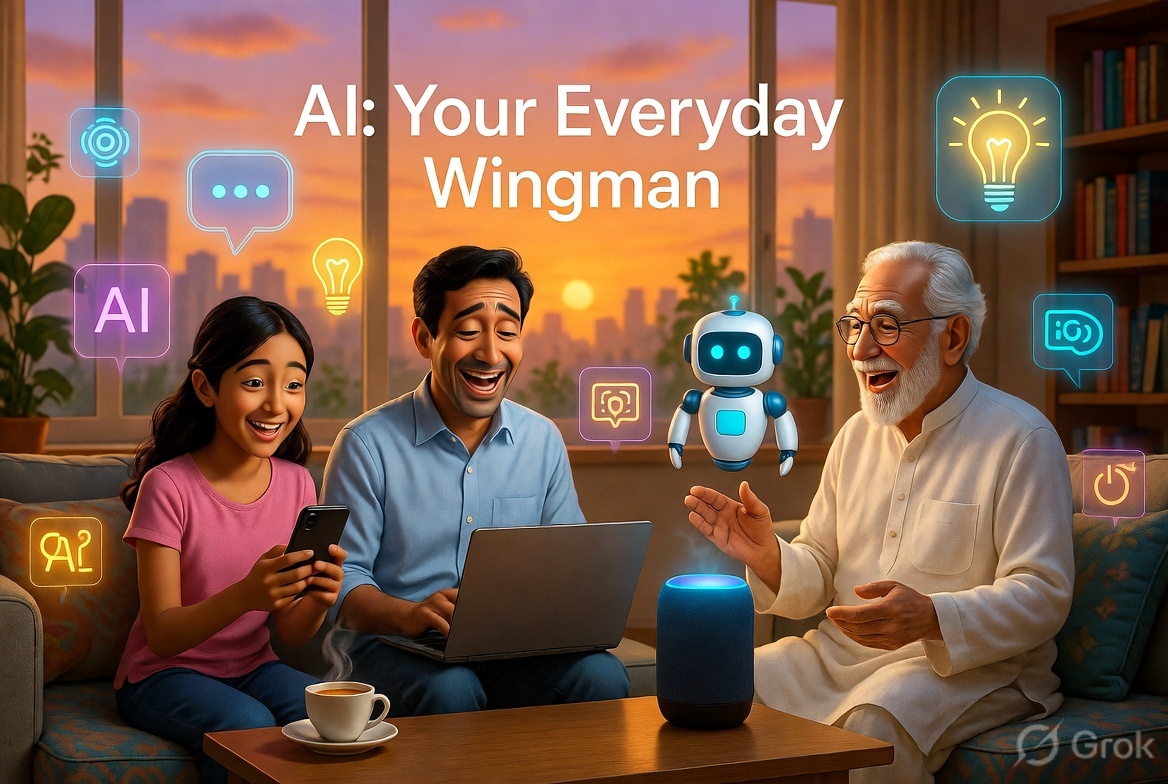
Picture this: It’s 7:15 a.m. in a cozy Bengaluru apartment. Sixteen-year-old Priya is already groaning at her alarm, her brain foggy from last night’s late-night study binge. Down the hall, her dad Raj (42) is drowning in unread emails before his first meeting. And in the living room, Grandpa Ravi (78) is squinting at the newspaper, muttering about “these newfangled gadgets” while his knees complain louder than the coffee machine.
Fast-forward one year. Same apartment, same family… but everything feels lighter. Priya’s AI study buddy just summarized her entire history chapter in a voice that sounds like her favorite YouTuber. Raj’s inbox? Handled. Grandpa? He’s chatting with his AI companion about yesterday’s cricket match while the smart lights gently wake him up. No magic wands—just everyday AI doing the heavy lifting.
Welcome to 2026, where AI isn’t some sci-fi robot taking over the world. It’s your witty sidekick that fixes real pain points: the forgotten grocery list, the 3 a.m. “what should I cook?” panic, the loneliness that creeps in when kids move away, the info overload that makes your head spin. Whether you’re a teen juggling boards and TikTok, a busy parent, or a silver-haired legend who just wants to stay independent, AI levels the playing field. Let’s walk through a day in their lives—real stories, zero jargon, and tools anyone can grab right now.
Morning Mayhem? AI Turns It Into “Me Time”
Remember the old drill? Wake up, scroll news (and doom-scroll), forget your vitamins, and rush out the door stressed. Pain point numero uno: information overload and forgetfulness.
Priya, our 16-year-old, used to waste 30 minutes hunting for “what’s due today?” Now she opens Notion AI (free tier at notion.so) on her phone and says, “Summarize my class notes and make a 10-minute study plan.” Boom—personalized flashcards appear. No more blank-page panic. For teens drowning in homework, tools like ChatGPT or Claude act as patient tutors. Ask, “Explain photosynthesis like I’m 16 and love memes,” and suddenly biology is hilarious.
Raj, the dad, fires up Perplexity AI (perplexity.ai) while brushing his teeth. “What’s the latest on the stock market in simple terms?” It reads the web, cites sources, and skips the fluff. His old pain? Wasting hours on Google rabbit holes. Now? Five minutes of clarity.
Grandpa Ravi? Voice is king at 78. He tells Amazon Alexa (or Google Assistant on any cheap smart speaker): “Alexa, read today’s headlines in Kannada and remind me to take my blood pressure meds at 8.” No tiny buttons, no squinting. Smart home devices like Echo Show even show family photos when he says “Show me pictures of the grandkids.” Pain point solved: isolation and daily forgetfulness. Seniors using these report feeling 30% more independent—real data from folks who hated tech until it started talking back nicely.
Quick tutorial for any age: Open ChatGPT or Grok, type “Act as my morning coach for a [your age] year old who hates mornings.” Watch it spit out a routine with reminders, jokes, and even a 2-minute breathing exercise.
Work, Study, or Side Hustle – AI Does the Boring Stuff
Mid-morning hits. Priya’s in class, but her AI has already turned yesterday’s lecture recording into bullet points via NotebookLM (notebooklm.google). No more “I didn’t understand a word.” Pain point: learning curves that feel like mountains. AI adapts to your pace—Duolingo’s AI now tweaks language lessons on the fly if you’re a visual learner.
Raj used to dread meetings. Now Granola or Otter.ai joins the call, transcribes everything, and emails him a one-paragraph summary with action items. “What should I reply to this client email?” he asks Claude. It drafts a polite, professional reply in his tone. Saved him 2 hours yesterday. Tools like Microsoft 365 Copilot do the same inside Word and Excel if you’re office-bound.
Even for the 90-year-old aunt in the family who runs a tiny home business selling pickles, AI helps. She voice-dictates recipes to ChatGPT, which turns them into beautiful printable cards. No more “I forgot the exact spice mix.”
Real pain addressed: Repetitive admin and writer’s block. AI isn’t replacing you—it’s the intern who never sleeps and actually listens.
Health, Home & Heart – The Invisible Helpers
Lunchtime. Raj snaps a photo of his dal-chawal with Calorie Mama or HealthifyMe’s AI. It tells him the nutrition and suggests a lighter evening snack based on his goals. Pain point: guessing your way through healthy living. Wearables like Apple Watch or affordable Fitbits now use AI to spot irregular heartbeats and gently nudge you to walk.
Grandpa’s biggest win? ElliQ, the friendly AI companion robot (elliq.com). It notices he hasn’t moved much and says, “Ravi, fancy a 5-minute chair yoga while we chat about the old days?” Loneliness— that silent killer that hits hard after 70—is getting a serious dent. Studies show short chats with empathetic AI cut loneliness scores as much as talking to a real person.
Evening cooking drama? “Hey Grok, I have chicken, spinach, and 20 minutes—what’s tasty and healthy?” I (or any good AI) give three options with step-by-step instructions. Smart fridges and Nest thermostats learn your routine and save electricity without you lifting a finger.
For the family’s mental health check-in: Apps like Wysa or Youper let teens or stressed parents vent anonymously. “I’m anxious about exams” gets a compassionate, evidence-based reply. No judgment, always available.
Creativity, Connection & Winding Down
Night falls. Priya uses Midjourney (via Discord, free trial) or free tools inside ChatGPT to design her college festival poster. “Make it look like a cyberpunk Diwali”—done in seconds. Grandpa asks Alexa to play his favorite old Hindi songs and even tells stories: “Tell me a bedtime tale about a wise old engineer who outsmarted robots.”
The whole family shares a custom AI-generated family newsletter via simple prompts: “Write a funny recap of our week with emojis.” Pain point: staying connected when everyone’s busy—solved with zero effort.
The Gentle Truth: AI Helps Everyone, But It’s Not Magic
From 16 to 90, the pattern is clear. AI tackles the universal pains—forgetting, searching forever, feeling overwhelmed, lonely, or stuck—by being patient, fast, and always on. It doesn’t matter if you’re a tech native or a first-time smartphone user; voice mode makes it accessible (just say the prompt out loud).
Pro tips from your friendly ByteBard:
- Start tiny: One tool, one habit. Try voice assistants first—they’re free and forgiving.
- Privacy first: Use incognito modes or local AI apps if you’re sharing sensitive stuff.
- Prompt like a pro: Be specific. “Act as my 75-year-old friendly uncle who explains tech simply” works wonders.
- Human + AI = superpower. Use it to free time for real hugs, chai, and cricket.
In the end, AI isn’t here to replace your life—it’s here to give it back. Less scrolling through chaos, more time for what matters: learning, laughing, loving, and living.
What’s one tiny AI experiment you’re trying tomorrow?